|
Zihao Zhang (张子豪) Email / Google Scholar / GitHub I am a third-year Ph.D. student at Southeast University and Shenzhen Loop Area Institution (SLAI). My tutor in Southeast University is Prof. Ziyuan Pu. In SLAI first year, I am supervised by Prof. Hongyang Li. And now I am supervised by Prof. Ping Luo. Prior to joining Southeast University, I earned my M.S. (2024) in Transportation from Hunan University, supervised by Prof. Chenhui Liu. My research focuses on autonomous driving and Embodied AI, particularly End-to-End Autonomous Driving, 3D object detection, trajectory prediction, and driving behavior analysis. |

News
|
Publications |
|
Autonomous Driving |
|
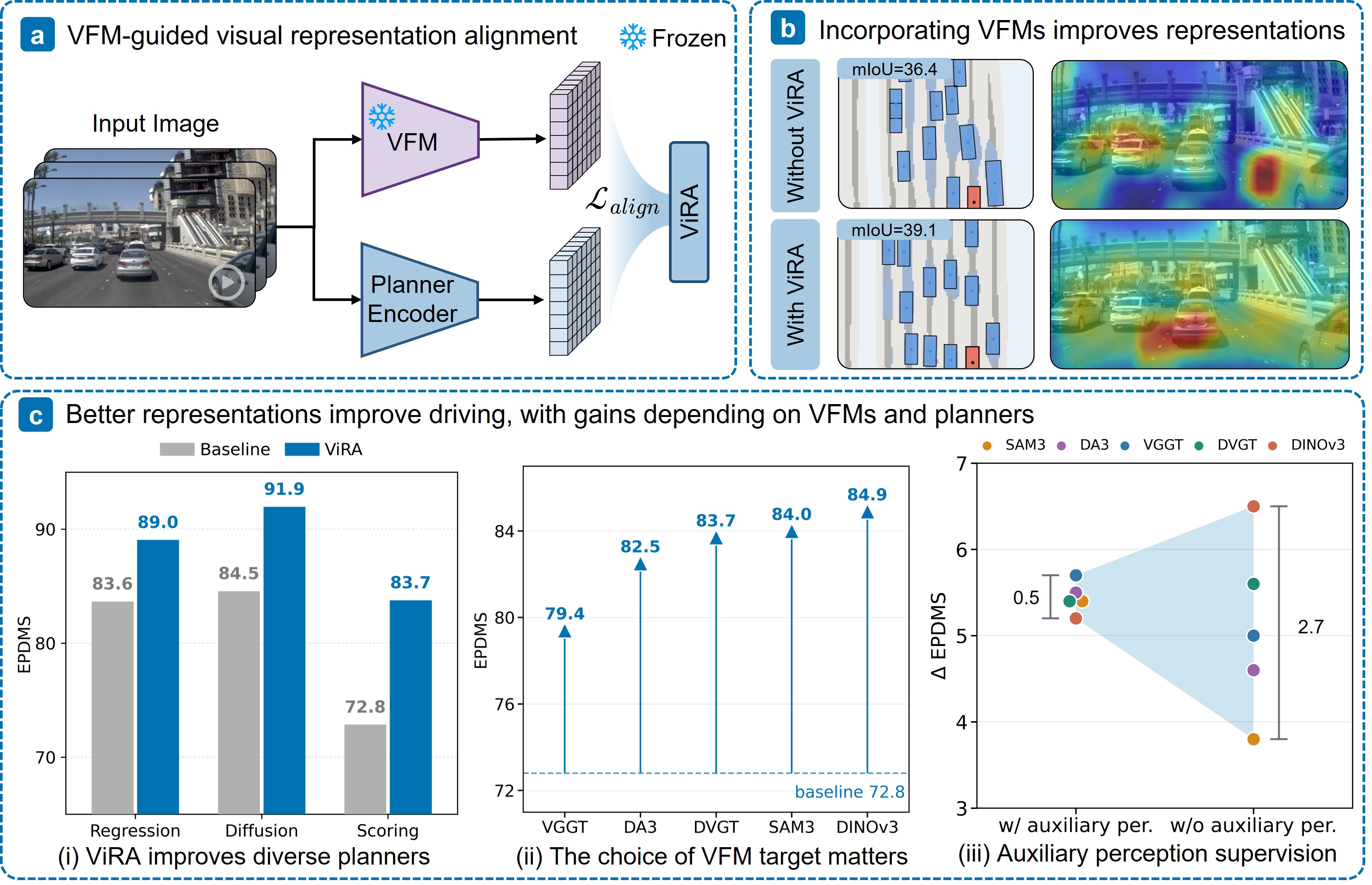
Do Better Visual Representations Always Lead to Better End-to-End Autonomous Driving?
Zihao Zhang, Haochen Tian, Tianyu Li, Changhui Jing, Jingliang He, Naisheng Ye, Ziyuan Pu, and Zhenjie Yang. preprint, 2026 


|
|
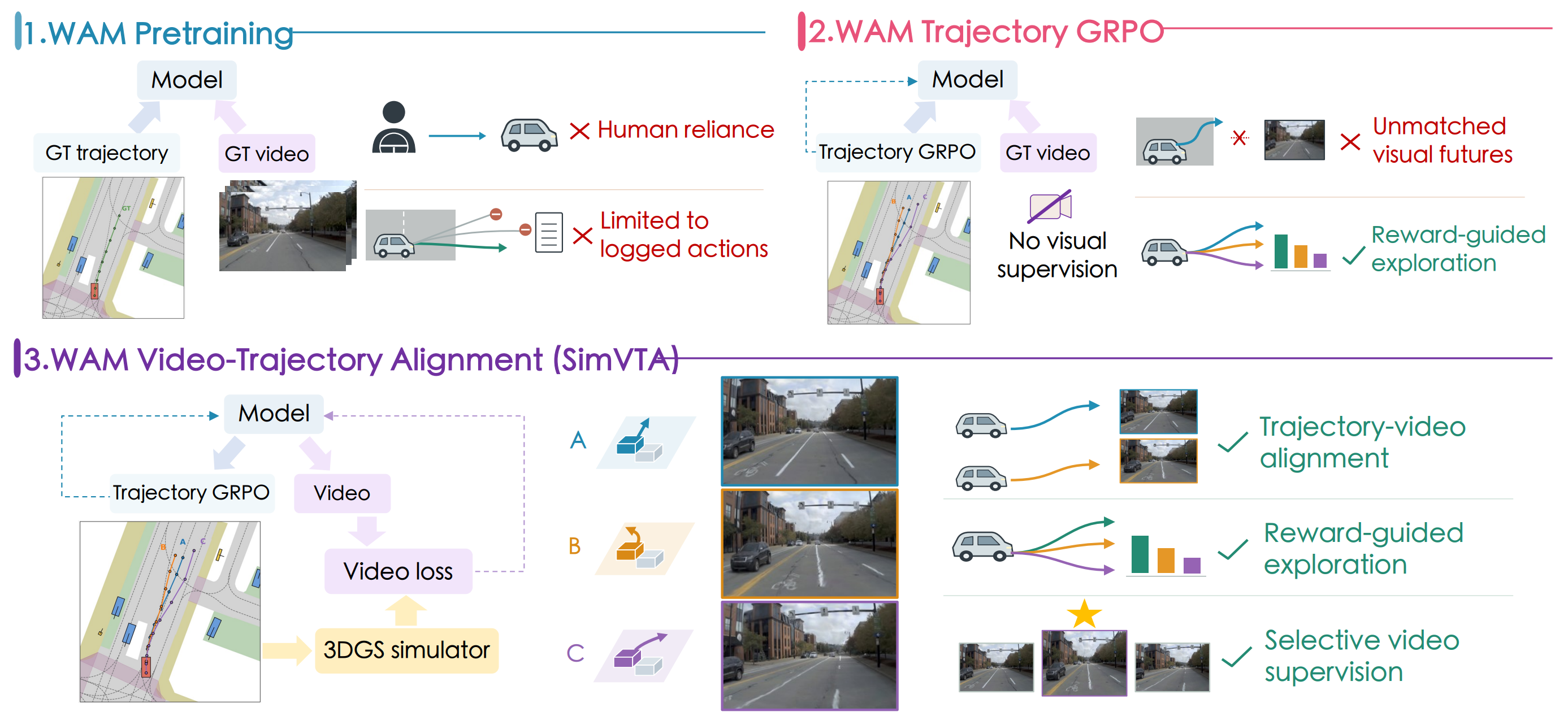
Simulation-Grounded Video-Trajectory Alignment for Driving World Action Models
Changhui Jing, Haochen Tian, Hongchen Li, Tianyu Li, Caojun Wang, Zihao Zhang, Yanhao Liu, Chengen Xie, Bailin Li, Hao Zhao, and Zhenjie Yang. preprint, 2026
|

|
Roadside Monocular 3D Detection via Cross-View Semantic Alignment
Pei Liu, Zihao Zhang, Haipeng Liu, Yiqun Li, Junlan Chen, Ziyuan Pu. Transportation Research Board (TRB) / IEEE ITSC, 2025 
|

|
Risk-Informed Diffusion Transformer for Long-Tail Trajectory Prediction in the Crash Scenario
Junlan Chen, Pei Liu, Zihao Zhang, Hongyi Zhao, Ziyuan Pu. Transportation Research Board (TRB), 2025
|
|
Traffic Agent Behavior Analysis |
ResearchMy research interests span several areas in Embodied AI and Autonomous Driving:
|
|
Design and source code from Jon Barron's website
|